


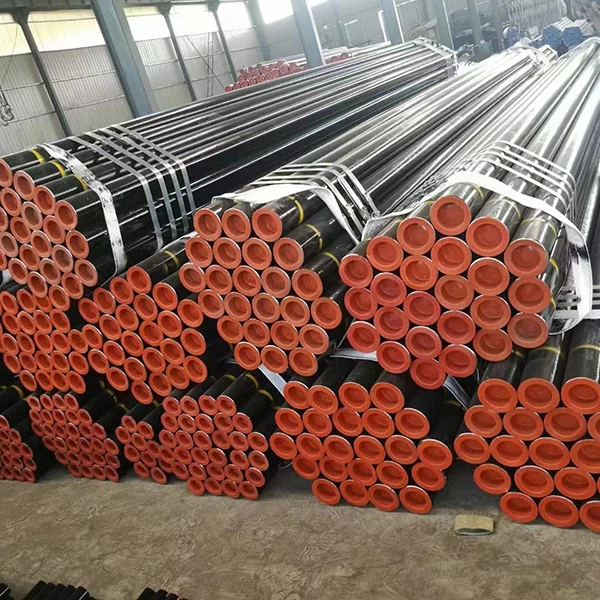
Product Name: ASTM A106 GR.C seamless pipe
Dimension and Wall Thickness
Seamless: 1/2"~24" (DN15~DN600) SCH5~SCH XXS
End connection:PE or BE
Marking: according to customer's...

Seamless Pipe
Why Choose Us
Factory Strength
Shanghai KEK Pipeline Technology Co., Ltd. is a reputable AAA listed pipe fittings manufacturer in China, covering an area of 66666㎡ (80000+㎡ in Phase II), with more than 30 technicians and engineers.
Our Certifications
KEK has obtained ISO9001, ISO14001, ISO18001, CE/PED, API certification and TS pressure pipe component special equipment manufacturing license, as well as Russia's EAC continuous certification.
Advanced Equipment
It has a full set of the largest and most advanced equipment in China, including a 4000-ton hydraulic press and a 3000-ton three-way cold extrusion molding machine.
Product Traceability
Product traceability, all products are numbered and indexed by furnace number, production process number, and RT inspection number to ensure the unique traceability of the product.
What is Seamless Pipe
Seamless Pipe are perforated from whole round steel, and steel pipes without welds on the surface are called seamless steel pipes. According to the production method, seamless steel pipes can be divided into hot-rolled seamless steel pipes, cold-rolled seamless steel pipes, cold-drawn seamless steel pipes, extruded seamless steel pipes, and top pipes. According to the cross-sectional shape, seamless steel pipes are divided into two types: round and special-shaped. Special-shaped pipes include square, oval, triangular, hexagonal, melon seed, star, and finned pipes. The maximum diameter is 900mm and the minimum diameter is 4mm. According to different purposes, there are thick-walled seamless steel pipes and thin-walled seamless steel pipes. Seamless steel pipes are mainly used as petroleum geological drilling pipes, cracking pipes for petrochemical industry, boiler pipes, bearing pipes, and high-precision structural steel pipes for automobiles, tractors, and aviation.
-
![ASTM A106 GR.C Seamless Pipe]()
-
![Stainless Steel 316L SMLS Pipe]() Stainless Steel 316L SMLS PipeProduct Name: stainless steel 316L SMLS piperead more
Stainless Steel 316L SMLS PipeProduct Name: stainless steel 316L SMLS piperead more
Dimension and Wall Thickness
Seamless: 1/2”~24” (DN15~DN600) SCH5~SCH XXS
End connection:PE or BE
Marking: according to... -
![SA335 GR P91 Seamless Pipe]() SA335 GR P91 Seamless PipeProduct Name: SA335 GR P91 Seamless piperead more
SA335 GR P91 Seamless PipeProduct Name: SA335 GR P91 Seamless piperead more
Dimension and Wall Thickness
Seamless: 1/2”~24” (DN15~DN600) SCH5~SCH XXS
End connection:PE or BE
Marking: according to... -
![ASTM A333 GR6 DN600 PIPE]() ASTM A333 GR6 DN600 PIPEProduct Name: ASTM A333 GR6 PIPEread more
ASTM A333 GR6 DN600 PIPEProduct Name: ASTM A333 GR6 PIPEread more
Dimension and Wall Thickness
Seamless: 1/2”~24” (DN15~DN600) SCH5~SCH XXS
End connection:PE or BE
Marking: according to customer’s... -
![API 5L GR. X70 Seamaless Pipe]() API 5L GR. X70 Seamaless PipeProduct Name: API 5L GR. X70 seamaless piperead more
API 5L GR. X70 Seamaless PipeProduct Name: API 5L GR. X70 seamaless piperead more
Dimension and Wall Thickness
Seamless: 1/2”~24” (DN15~DN600) SCH5~SCH XXS
End connection:PE or BE
Marking: according to...


Benefits of Seamless Pipe
1. Seamless Pipe IS STRONG
Tubular steel sections are naturally strong, especially against longitudinal stress, which is why steel tubes are used in applications like scaffolding. Steel tubing and pipes are particularly resistant to length ways compression, but still offer better resistance against bending forces than flat sheet steel.
2. Seamless Pipe ARE HOLLOW
Seamless Pipe and pipes are not solid cylinders of metal, but have an aperture running their full length-making them an excellent option to protect cables or to carry water and other fluids. Their extra strength means they can be used above ground where the conduit will be exposed to the elements, or buried where they can resist puncturing during any future excavation work.
3. Seamless Pipe ARE LIGHT
Of course steel sections will always have a certain amount of weight, but by being hollow, Seamless Pipe can be lighter than solid structural steel, where total weight is a concern. We have Seamless Pipe that starts from just 1.43 kg per metre, ranging right up to our heaviest duty steel tube sections at 411.0 kg per metre.
4. Seamless Pipe ARE CONSISTENT
Consistent thickness, diameter and cross-sectional shape along their length mean it is easy to calculate the total weight of any size and length of steel tubes, using basic maths in a matter of moments. We also list typical weights per unit length, making it even easier to calculate the total weight for a given size and thickness of steel pipe just by multiplying the unit weight as listed.
5. Seamless Pipe COMES IN MANY SIZES
And finally, there's a huge range of sizes of Seamless Pipe and pipes available – from a diameter of 21.3 mm to 457.0 mm, and usually a choice of thicknesses. We have smaller steel pipes at a fixed thickness of 3.2 mm, while at the heavier end of the range, our 457.0 mm diameter steel pipes can be specified at up to 40.0 mm thick.
Types of Seamless Pipe
Hot rolled seamless pipe
Hot-rolled seamless pipes are made from heated round steel billets and shaped into a cylindrical shape. They are typically used in engineering applications that require greater strength than cold rolled or CDS pipe. The heat treatment process makes them extra hard and strong, able to withstand high temperatures and pressure. Advantages of hot-rolled seamless pipe include cost-effectiveness, structural strength, and the ability to customize shapes. Disadvantages include their weight, which makes them difficult to transport and install. Hot rolled seamless pipe is often used in larger projects involving higher pressures and temperatures.
Cold rolled seamless pipe
Cold-rolled seamless pipes are made from hot-rolled steel formed by a series of rolls. Unlike hot rolled steel, cold rolled steel is harder and more brittle. It also allows for more precise machining and shaping, making it ideal for equipment that requires precision. Advantages of cold rolled pipe include higher corrosion and wear resistance, better machinability and lower cost. Disadvantages of cold-rolled pipe include lack of strength compared to hot-rolled steel, greater potential for cracking, and limited customizability. Cold-rolled pipe is typically used in smaller applications that don’t require much strength or precision.
Cold drawn seamless pipe
Cold drawn seamless pipe is made by forcing hot rolled pipe through one or more dies. This forces the material to become denser, making it stronger. They are ideal for applications where strength and pressure resistance are critical, such as automotive hydraulic lines and pipes. The advantages of cold-drawn seamless pipe include high strength, low cost, and the ability to produce precise shapes. Disadvantages include their potential to break if not properly tempered, lack of flexibility, and limited customizability. Cold drawn seamless pipe is most commonly used in automotive and industrial applications.
Application of Seamless Pipe
Construction field
Seamless steel pipes are widely used in the construction field. They are mainly used in important structures such as high-rise buildings, cold storages, and roof waterproofing to play load-bearing and waterproofing functions.
Chemical industry
Seamless steel pipes are also widely used in the chemical industry, mainly used to transport ammonia, urea, methanol and other chemical raw materials. Since these media are often corrosive, seamless steel pipes are required to ensure safe operation of the pipelines.
Petroleum field
Seamless steel pipes are also widely used in the petroleum field, mainly used in the construction and installation of petroleum pipelines, petroleum storage tanks and other equipment. Seamless steel pipes are widely used because of their corrosion resistance, high temperature resistance, and high pressure resistance.
Mechanical field
Seamless steel pipes are also widely used in the mechanical field (seamless mechanical tubing), mainly used to manufacture parts for automobiles, tractors and other agricultural machinery. Seamless steel pipes are widely used because of their high strength and corrosion resistance.
Differences Between Seamless And Welded Pipes
Appearance
Seamless steel pipe uses a cylindrical steel ingot as raw material. The external defects of this billet cannot be removed hot, so it would have to wait until the manufacturing of the product is finished to be polished, which is a waste of time and extra energy. The welded tube is generated from a hot rolled (or hot drawn) coil. Its quality makes it much easier to handle and the surface obtained from this process is much smoother and with less roughness. Therefore, the surface of the welded pipe will always be better than that of the seamless pipe.
Molding process
The seamless tube can only be formed when the rolling process is completed. However, since the welded tube is drawn from a sheet or plate that has to be bent, all types of welding can be performed while the tube is being produced (bending, rolling, etc.).
Performance and use
Seamless tubing withstands higher pressure levels. Its resistance is greater than that of welded pipe. For this reason, it is very common to find this pipe in high pressure equipment or in thermal industries working with boilers.The seam of the welding tube is its weak point, and often affects its final performance. This type of pipe can withstand up to 20% less pressure than seamless pipes. This feature is the main factor that customers consider when choosing a seamless pipe. In fact, most industrial installations use seamless pipes. They are capable of withstanding extreme thermal, chemical and mechanical loads and levels. Welded tubes, on the other hand, are used more in other industries, such as aerospace, automotive and electronics.
Size
Most manufacturers produce seamless pipes with an outer diameter of 508 millimeters. The average diameter is less than 406.4 millimeters due to manufacturing equipment limitations. If a customer requires seamless tubes of a larger size, special machinery must be used to hot expand the material. However, the quality of the expanded pipe is not the same as that of the original seamless steel pipe. Welded steel pipe, on the other hand, has no such limitations. Their sizes can range from 48.3 milimeters to 2540 milimeters.
How to Choose Seamless Pipe
01/
Application requirements analysis
First, it needs to be clear what application the seamless steel pipe will be used for. Different engineering projects have different requirements for pipeline materials. High temperature and high pressure, chemically corrosive environment, structural support, etc. all require seamless steel pipes with specific properties. Ensure that the performance of seamless steel pipes meets the needs of specific applications.
02/
Determine pipe size
Clearly define the dimensions of seamless steel pipe, including outer diameter, wall thickness and length. These sizes depend on the design and layout of the piping, as well as the required flow and pressure requirements. Ensure that the pipe size selected complies with engineering design specifications to ensure pipe performance.
03/
Material type selection
Select the appropriate material type based on application needs. Common seamless steel pipe materials include carbon steel, stainless steel, alloy steel, etc. Each material has a different chemical composition and mechanical properties and is suitable for different environmental conditions.
04/
Corrosion resistance
If the project will be exposed to corrosive environments, such as chemical plants or seawater environments, you need to choose seamless steel pipes with good corrosion resistance. Stainless steels and special alloy steels are often used in these applications because of their ability to resist corrosion.
05/
High temperature resistance
For projects that need to work in high-temperature environments, such as refineries or boiler systems, choose seamless steel pipes with good high-temperature resistance. High-temperature alloy steels are often used in these applications because of their ability to maintain strength and stability.
06/
Mechanical performance requirements
Consider the mechanical properties of the pipe, such as tensile strength, yield strength, and impact toughness. These properties are critical to the load-bearing capacity and durability of the pipeline. Ensure that the selected seamless steel pipe has the necessary mechanical properties.
What are The Quality Requirements for Seamless Steel Pipe Production


Ingredients
It clearly stipulates the components of hazardous chemical molecules As, Sn, Sb, Bi, Pb and vapor N, H, O, etc., in order to improve the uniformity of the components in the steel and the purity of the steel, and reduce the non-metallic material parameters of the finishing tube. To remove debris and to improve its distribution, out-of-furnace refining equipment is generally used to refine the molten steel, and even electroslag furnaces are used to remelt and refine the finish-rolled tubes.
Specification precision and appearance design
The geometrical specifications of the seamless steel pipe mainly include the diameter, wall thickness, ellipseness, length, bending degree, the inclination of the inner hole of the pipe, the angle of view of the welding seam and the blunt edge, and the cross-sectional specification of the seamless steel pipe of the opposite sex.
Process performance
The specification requires that the surface of the seamless steel pipe is smooth and clean. The common defects are cracks, hair lines, inward folds, outward folds, rolling, inner straights, outer straights, delamination, scabs, dents, convex hulls, floating. Rust (surface), scratches, inner spiral, outer spiral, blue line, concave correction, roll printing, etc. Among them, cracks, inward folds, outward folds, rolling, delamination, scabs, dents, convex hulls, etc. are risk defects; the surface, blue lines, abrasions, mild internal and external straights, mild Internal and external spiral, concave correction, and roll printing are general shortcomings.
Physical properties
It includes the physical properties at room temperature and the physical properties and corrosion resistance properties at a certain temperature, generally speaking, it depends on the composition of the steel, the mechanical properties and the purity of the steel, and the heat treatment process of the steel. In some cases, the cold rolling temperature and deformation level of the seamless steel pipe will also cause harm to the characteristics of the seamless steel pipe.
Use performance
Includes flaring, flattening, coiling, bending, ring-pulling and electric welding properties of seamless steel tubes.
Alloy composition
High and low-rise structures including seamless steel pipes.
How to Maintain Seamless Pipe
Avoid Metal to Metal Contact
It is important to note that when you are first laying out your steel pipes, you need a strategic plan to place them in a manner where contact with other metals is minimal. Constant contact of tubes with other metals can lead to frictional damages such as scratches and dents. In addition, metal-to-metal contact may also cause corrosion. Placing your seamless pipes at a reasonable distance from each other can help prevent this.
Reduce Seamless Pipe and Steel Movement
Loosely-arranged or dangling pipes are another reason for early damage to the steel pipes. This makes them vulnerable to friction, jolt or displacement damage, especially during transportation.
Carry Out Regular Inspection
Regular inspection is an excellent way to prevent pipe damages from getting graver or irreparable. It is a common mistake of owners to skip this step and land in situations when corrosion, leaks, and breakage start to happen regularly. Faulty pipelines can lead to accidents and costly replacement of pipes, which can be prevented earlier.To avoid such scenarios, we recommend conducting regular inspections of steel pipes. The best way to deal with leakage, corrosion, or other damages is to consult your supplier. You can also look for holes and cracks in the pipes to inform them.
Clean and Polish Steel Pipes Regularly
With watchful cleaning and polishing of seamless steel pipes, you can easily prevent the accumulation of dirt and grime in your pipes. Upon consultation with your pipe provider, you can also use specified chemicals to clean the insides of the tubes. After cleaning, do not forget to lubricate the pipes after.
Identify and Make Repairs
Even though most pipe repairs require professional help, you can easily tackle certain maintenance. If you identify minor damages early, there are some handy repairs like sealing leaks, holes and cracks with putty or specialised plumber bandages, which you can do yourself. These are surely temporary repairs but can save your pipes from long-term damage. Later, you can seek professional help to mend the pipes permanently.
Choose High-quality Seamless Steel Pipes
To get the deserving value for your money, we advise you to choose supreme quality pipes only for the best results. Consult a supplier who is an expert in the industry and can help you determine which kind of seamless steel pipe is best for your use. Know that there are certain types of tubes meant for specific applications. Therefore, it is best to consult a professional for an error-free installation.
Our Factory
Shanghai KAIKE Pipe Technology Co., Ltd. is a reputable AAA listed pipe fittings manufacturer in China,covering an area of 66666㎡ (80000+ ㎡in stage II) and with technician and engineers more than 30 personal. Kaike Group is made up of Shanghai Kaike Piping Technology, Shanghai Kaike Valve manufacture and one export company Shanghai Chainmill Industry, they are all based in Shanghai, which the economic center of China. KAIKE has reached up to an annual output of pipe fittings of 20,000 tons.KAIKE has the ability to produce by various materials like carbon (low temperature) steel, stainless steel, duplex steel, alloy steel, nickel base alloy and special materials as requested according to GB, SH, Hg, JB, SY, ASME/ANSI, MSS, JIS, DIN, BS,GOST etc.Its main products include BW pipe fittings(SMLS or welded), steel flange, forged pipe fittings as well as prefabricated spools and manifolds,and also can produce according to customers' drawings and requirements.


Certificate


FAQ
We're professional seamless pipe manufacturers and suppliers in China, specialized in providing high quality customized service. We warmly welcome you to wholesale high-grade seamless pipe at low price from our factory. Contact us for cheap products.
high strength steel pipe, data center prefab piping, high pressure steel pipe